McLaren arrived in Miami searching for answers — and left believing they may finally have a car capable of fighting at the very front again.
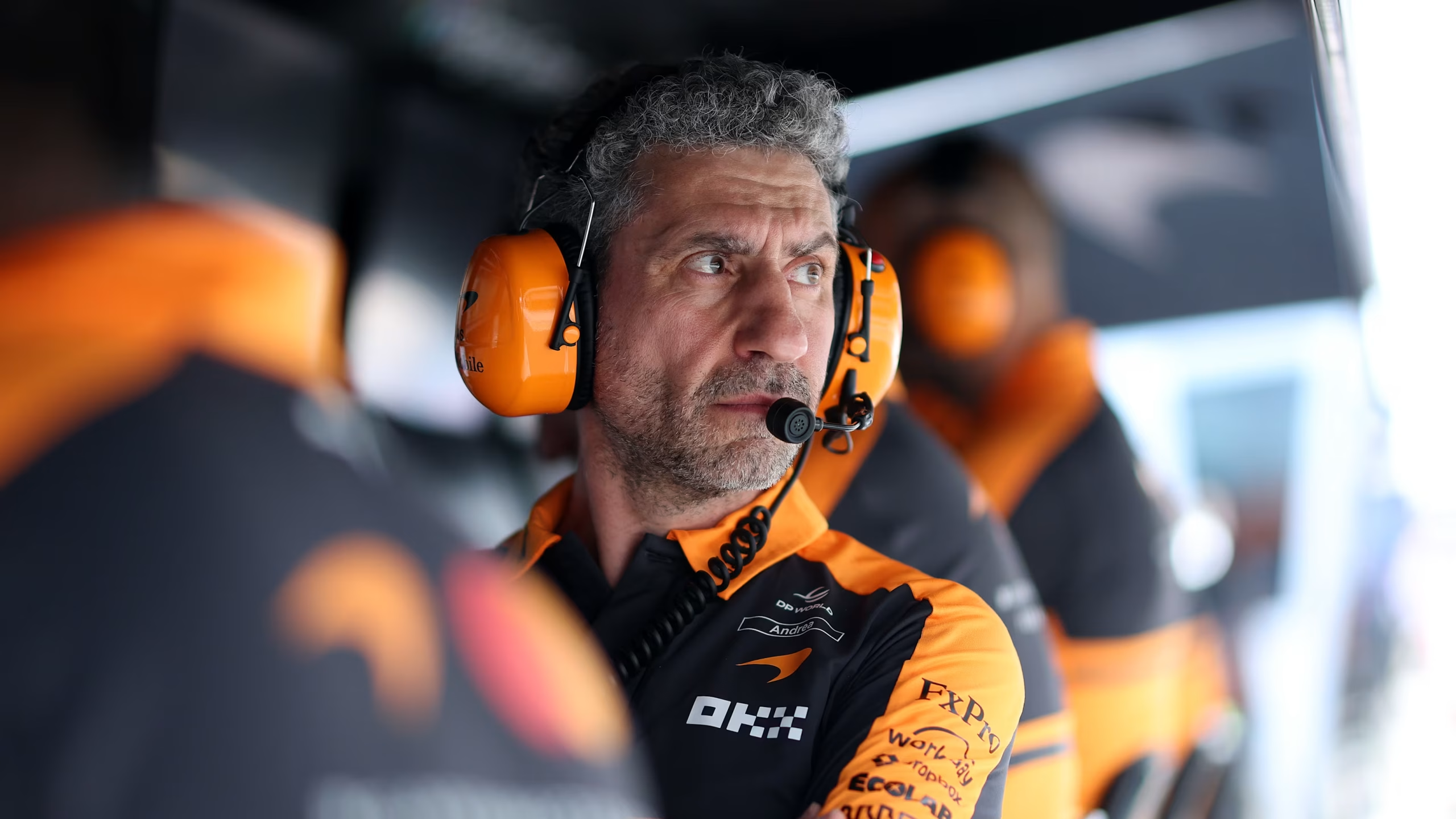
But despite a breakthrough weekend packed with podiums, speed, and renewed optimism, Team Principal Andrea Stella admitted one painful reality remained: victory slipped away because McLaren failed to maximize the opportunity when it mattered most.
The Miami weekend marked a major turning point for the Woking squad.
After introducing a massive upgrade package during Formula 1’s five-week break, McLaren suddenly looked transformed. Stella had boldly hinted before the race that the team would unveil something close to a “completely new car” — and on track, the improvement was impossible to ignore.
Lando Norris immediately showcased the pace by storming to Sprint pole position before converting it into his first victory of the 2026 season. Team mate Oscar Piastri backed it up with a brilliant second-place finish, sealing a dominant Sprint one-two for McLaren.
For the first time all season, McLaren looked genuinely dangerous.
But Formula 1 weekends are never that simple.
When Saturday qualifying arrived, Mercedes responded with terrifying pace of their own, powered by rising star Kimi Antonelli. McLaren’s raw one-lap advantage faded, forcing Norris and Piastri to settle for second and third in Sunday’s Grand Prix.
Even so, Norris nearly pulled off something remarkable.
For large stretches of the race, he looked capable of taking the fight directly to Mercedes — until one crucial strategic moment changed everything.
The pit stop that changed the race
According to Stella, McLaren’s biggest mistake came during the pit stop phase.
While Mercedes aggressively brought Antonelli into the pits early, McLaren kept Norris out one lap longer. That single decision allowed Mercedes to execute a perfect undercut, handing Antonelli track position and ultimately control of the race.
And once McLaren lost the lead, reclaiming it became nearly impossible.
Stella admitted the timing error, combined with time lost in pit lane itself, may have cost Norris a genuine shot at victory.
The frustration inside McLaren was obvious because, despite competing against what Stella described as the fastest car on the grid, they finally had the performance to dream bigger.
McLaren’s biggest sign of hope yet
Still, the Miami weekend delivered something McLaren had been desperately chasing: momentum.
Not only did the team score more points in one weekend than the previous three races combined, but the upgraded package also revealed major progress in tire consistency and overall race pace.
Stella believes McLaren now possesses one critical strength that carried over from last season — the ability to manage tire wear better than most rivals during long race stints.
That advantage helped keep Norris competitive even against Mercedes’ superior raw speed.
And perhaps even more importantly, McLaren’s development push is not finished yet.
Stella confirmed that more upgrades are already on the way, all stemming from the same aggressive redesign philosophy introduced in Miami.
The belief inside the garage is growing.
Four teams, tiny margins, massive consequences
Miami also confirmed something Formula 1 fans have been waiting for: the competitive order is tightening rapidly.
According to Stella, McLaren, Ferrari, and Red Bull have all closed the gap significantly after their latest upgrades, creating an intense four-team battle near the front.
But when margins are measured in tenths of a second, perfection becomes everything.
Strategy. Pit stops. Adaptation. Timing.
One small error can decide an entire Grand Prix.
And while McLaren leaves Miami encouraged by their dramatic progress, Stella knows the team also missed a golden opportunity.
Because in Formula 1, being fast is no longer enough.
You have to execute flawlessly too.