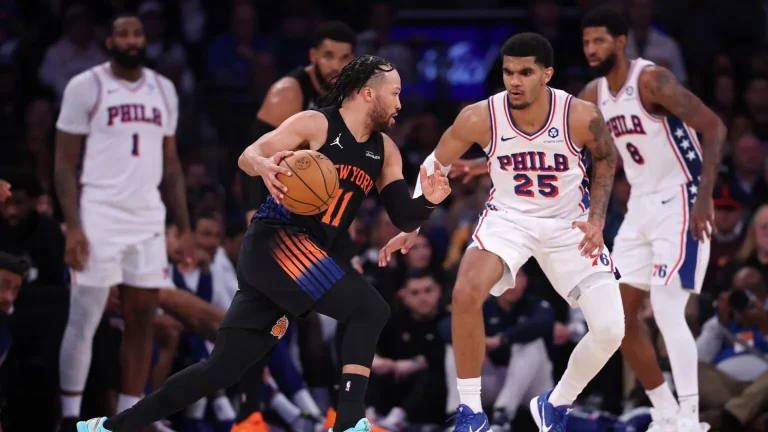
The Sixers are now one game away from a trip to Cancún.
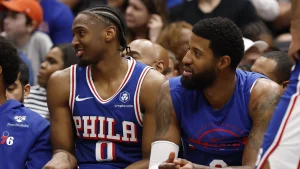
The Philadelphia 76ers are now staring at playoff elimination after a devastating Game 3 collapse against the New York Knicks, and tough questions are already emerging about who deserves the most blame for another crushing postseason setback. With the Knicks now holding a commanding 3-0 series advantage, Philadelphia’s championship hopes are hanging by a thread after a frustrating performance marked by injuries, offensive disappearances and missed opportunities.
Tyrese Maxey’s Injury Struggles Raise Major Concerns
Much of the spotlight has landed on Tyrese Maxey, whose unusually quiet performance became one of the defining storylines of Game 3. After previously revealing he jammed his finger and lacked confidence handling pressure defense in Game 2, signs of discomfort appeared to linger into Friday night’s crucial playoff battle.
The usually explosive guard looked noticeably passive, struggling to attack with his trademark aggression and appearing hesitant to fully impose himself offensively. Despite shooting efficiently from the field and finishing with 17 points, Maxey never truly took control of the game — something Philadelphia desperately needed in such a high-pressure situation. Even more concerning, the All-Star guard failed to attempt a single free throw, highlighting just how little pressure he placed on New York’s defense.
Throughout the fourth quarter, frustration became increasingly visible as commentators openly questioned why Maxey appeared reluctant to attack the basket. Instead of taking over offensively, he often deferred after drawing defensive traps, swinging the ball to teammates for open looks that the struggling Sixers repeatedly failed to convert. Whether his subdued display was caused more by injury limitations or New York’s relentless defensive pressure remains unclear, but one thing became obvious: Philadelphia needed the aggressive version of Maxey — and never got it.
Paul George’s Explosive Start Turned Into Historic Disappearance
If Maxey struggled quietly, Paul George delivered one of the strangest playoff performances fans have seen in years. The veteran star looked unstoppable early, erupting for 15 first-quarter points and knocking down shots from all over the floor. His hot shooting initially gave Philadelphia hope that he might carry the offensive burden while Joel Embiid battled injury concerns.
But after his electric opening quarter, George shockingly vanished. Completely.
The star forward failed to score another single point across the remaining three quarters, finishing the game with one of the most dramatic offensive drop-offs in recent NBA playoff history. After beginning the night shooting with confidence and rhythm, George suddenly went ice-cold, missing every attempt for the rest of the contest while Philadelphia desperately searched for offensive production.
The timing could not have been worse. With New York missing key defensive presence OG Anunoby, Game 3 seemed perfectly positioned for George to dominate. Instead, his offensive disappearance left a massive scoring void the Sixers simply could not overcome. For a player expected to deliver in big postseason moments, the performance raised serious questions about leadership and consistency under pressure.
Quentin Grimes’ Playoff Regression Becoming Impossible to Ignore
Another growing concern for Philadelphia is the disappointing postseason impact of Quentin Grimes. After entering the playoffs expected to provide reliable scoring, perimeter defense and bench stability, Grimes has instead struggled to make a meaningful impact when the Sixers have needed him most.
Throughout the regular season, Grimes emerged as a productive contributor capable of supplying offensive balance and valuable minutes. But the playoffs have exposed a different reality. His production has dropped significantly, with inconsistency becoming an increasingly frustrating problem for a team already lacking offensive depth.
Head coach Nick Nurse appeared to place trust in only a handful of players during Game 3, leaning heavily on his starters and Grimes due to limited confidence in the rest of Philadelphia’s bench unit. Unfortunately, Grimes failed to fully capitalize on the opportunity despite late moments where his shooting briefly gave fans hope of a comeback.
Questions surrounding his future are also beginning to grow. Once believed to be in line for a major payday, Grimes’ playoff struggles may now significantly impact his offseason market value. While teams may still see upside in his regular-season performances, his inability to consistently deliver in meaningful postseason moments could dramatically alter contract expectations.
Joel Embiid’s Health Crisis Looms Over Sixers Collapse
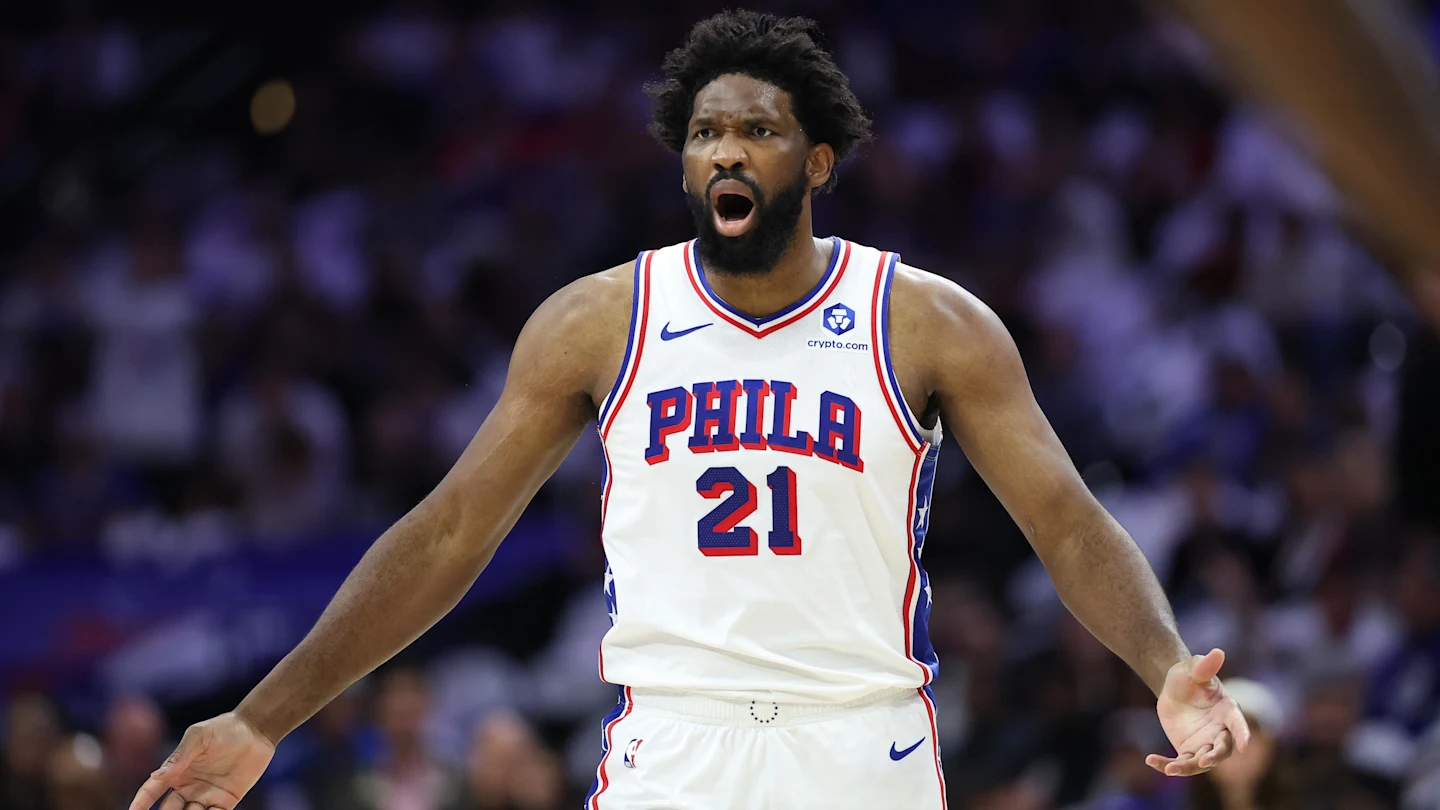
Yet perhaps the biggest storyline — and most difficult reality for Philadelphia — revolves around franchise superstar Joel Embiid. Returning from hip and ankle injuries after missing Game 2, Embiid fought through obvious pain to suit up for one of the biggest games of the season. But despite his determination, the MVP-caliber center looked far from fully healthy.
On both ends of the floor, Embiid appeared physically limited. Defensively, the Knicks showed little hesitation attacking him directly, sensing vulnerability around the rim. Offensively, his usual dominance inside the paint was noticeably absent, while even reliable mid-range shots and perimeter looks failed to fall. Seeing Embiid struggle with movements and timing created a difficult reality for Sixers fans — their superstar simply did not resemble himself.
Although head coach Nick Nurse praised Embiid’s willingness to push through injury and sacrifice for the team, the bigger question now centers on whether continuing to play him is the right decision. Surprisingly, Philadelphia arguably looked more fluid offensively during stretches without Embiid in Game 2 before fatigue eventually set in. That uncomfortable truth may force difficult internal conversations between the player, coaching staff and medical team ahead of the next matchup.
Knicks in Total Control as Sixers Face Historic Reality
Now trailing 3-0 in the series, Philadelphia finds itself trapped in nearly impossible territory. No NBA team has ever successfully overcome a 3-0 playoff deficit — a brutal statistic hanging over the franchise as pressure intensifies. The Knicks, meanwhile, continue looking composed, disciplined and increasingly confident as they edge closer to a trip to the Conference Finals.
For the Sixers, blame can be spread across multiple areas: injuries to key stars, Maxey’s limited aggression, George’s offensive collapse, Grimes’ inconsistency and Embiid’s physical struggles all played major roles. But ultimately, Game 3 felt like the perfect storm of everything going wrong at the worst possible moment.
With elimination now looming, Philadelphia faces an uncomfortable truth: unless dramatic changes happen immediately, another painful playoff exit may be inevitable.